Showing posts with label Fair Trade. Show all posts

Tuesday, 13 May 2014

Small Changes in Big Business

Can fashion ever be ethical?

And more to the point; can fast fashion ever be ethical?

This point is discussed and debated in the world of ethical fashion on a regular basis. When I first came across the ethical fashion industry I think I was maybe a little too idealistic about the ethical labeling organisations and maybe a little too critical of the fast fashion industry. Either that or just maybe the fast fashion industry is improving. 

I think it's probably a bit of both but either way, I feel like I need to state the case for the fashion industry that in the past I may have judged rather harshly.

The high street has come a long way since I first became acquainted with corporate social responsibility and ethical trade. In the beginning I cast my judgment upon the high street indiscriminately, failing to take notice of those brands that were seeking to change. To be fair, the brands that choose to seek more ethical ways of trading are not always the ones who shout about it. If we take a look at brands like ASOS and New Look, you might not immediately think of them as very 'green' companies but both are going above and beyond the average for where they sit within the industry.

Big high street fashion retailers are obviously going to face challenges when trying to improve working conditions in supply chains that are hugely expansive, impossibly global and intrinsically complicated. But the positive aspect of their daunting size is the incredible impact that they are capable of creating. Just one small policy change can impact hundreds of thousands of workers lives. I don't think that we should be so quick to cast aside the huge changes big retailers can and do make to workers lives just because we judge that these changes are relatively small. In big business, a small change can have a huge impact.

So I'm not saying that we have it right yet. I think that the high street has a long way to go but I do believe that there are some incredibly passionate people out there, behind the scenes, that are battling to make sure that the small changes have a bigger impact in an industry that is notoriously complicated and constantly challenging.

Wednesday, 16 October 2013

Blog Action Day: Outfit Post

It's Blog Action Day 2013 and this year we, as a collective, are focusing on human rights. As an ethical fashion blogger I've looked at the Rana Plaza factory collapse in my previous post and now I'm doing an outfit post to show you how you can use fashion to promote the proper enforcement of human rights.


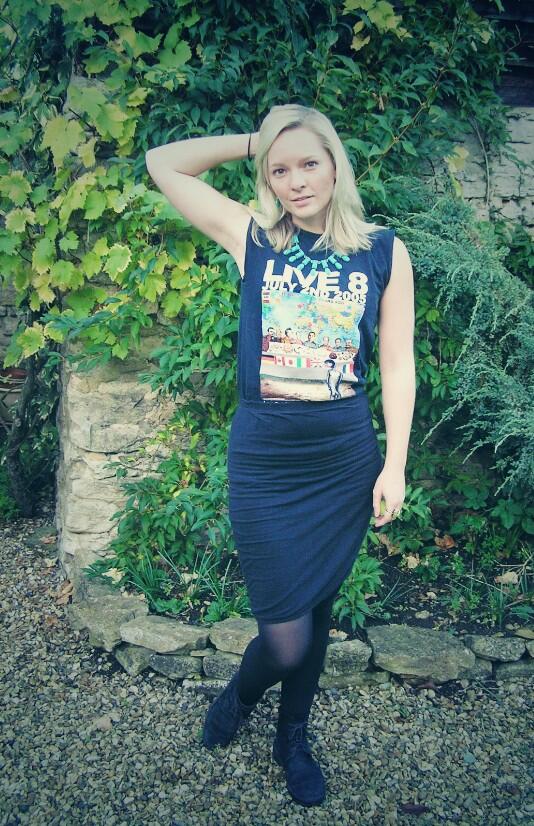
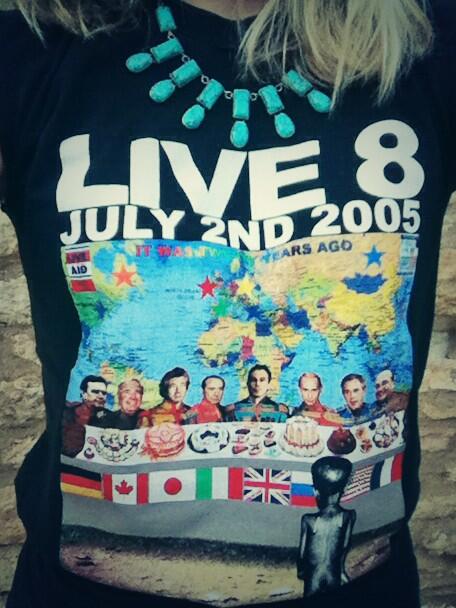
In this picture, I'm wearing a top and a pair of boots both bought from Oxfam. Buying from Oxfam not only promotes the reduction of consumption and waste in the fashion industry but also gives to an incredibly good cause. Oxfam is committed to reducing poverty around the globe and promoting human rights. This top is actually originally from Edun- an ethical fashion brand which uses Fair Trade in its supply chain and promotes use of the African fashion industry. Fair Trade strictly promotes human rights in its labour policies. 

The skirt is from People Tree- pioneer of ethical and Fair Trade fashion and the first fashion brand to be accredited by the WFTO. People Tree is committed to providing long term jobs to those who need them most and creating beautiful items of clothing in the most human and environmentally friendly way possible.

By choosing to shop from ethical, Fair Trade, second hand and charity fashion brands; we can make a positive difference to peoples lives around the world and throughout the supply chain. Our purchasing power should not be over looked. As consumers we hold immense power over fashion brands; their supply meets our demand- if we demand better, they will have to provide.


Join the debate on twitter : )
@onegreendress  |  @MrsWandas  |  @BlogActionDay12  |  #BAD2013  |  #HumanRights

Blog Action Day: Rana Plaza

The Rana Plaza factory collapse in Bangladesh opened up the worlds eyes to a problem that has been ignored for too long. The garment industry has been employing labourers around the world without being fully aware of how human rights are being enforced or simply disregarded. This is mainly due to fashion brands out-sourcing labour and refusing to own the factories that produce their garments. In the past, this has relinquished them from any responsibility for factory safety upkeep and working conditions but now people are starting to question this chain of accountability. 


The fashion industry's supply chain is notoriously long and complicated; spanning many countries and cultures, travelling thousands of miles, passing through countless pairs of hands. This is where the problem of accountability and responsibility arises. Who do we look to, to enforce human rights throughout the supply chain? 

Fashion brands? Consumers? Governments?

Well I think that we all need to chip in. When a person's human rights are denied, we have a collective responsibility to speak up. Governments around the world should all be moving towards introducing not only minimum wages but living wages. There are some fashion brands that are already providing this for their employees around the world and I hope to see others follow in this vain. As consumers, what can we do? Well, we can demand more. We can call out the retailers that are disregarding human rights, we can promote the ones that are enforcing them and we can cast our vote with our money by letting our purchasing power do the talking.

After the Rana Plaza disaster, the 'Accord on Fire and Building Safety in Bangladesh' was drafted by Uni Global Union, IndustriALL and NGWF. It was put forward to all the fashion companies producing garments in the city. Under the accord, garment workers can refuse to work in unsafe conditions and must continue to be paid under these circumstances until the issues are resolved. The fashion brands were not eager to sign, with some major hesitations from; Matalan, Edinburgh Woolen Mill, J D Sports and River Island. We are still waiting for Peacocks and Sports Direct to sign.

The fashion companies complicit in the Rana Plaza disaster were invited to Geneva to discuss setting up a fund for the victims. Of the 29 companies involved, only 9 turned up and only Primark contributed to the fund. It's time for us to call upon these fashion brands to become accountable to their workers. You can call on Peacocks and Sports Direct to sign the Accord via the See Through Fashion campaign here. You can also chose to cast your consumer vote wisely by shopping for clothes using ethical fashion brands that enforce living wages and by buying second hand from charity and vintage shops.


Learn more about human rights and ethical fashion by following the debate today on twitter
#humanrights | #BAD2013 | #ethicalfashion | @blogactionday12 | @MsWandas | @onegreendress


Picture from: Business of Fashion

Friday, 20 September 2013

Style Post: Peopletree & Komodo


This was taken before the rains came.... Seriously weather- what are you playing at?! But when it was warm enough to go outside in a skirt, sans tights and thermals, I wore this to dinner and drinks with my lovely housemates. My new Komodo jacket has proved its worth by being just as fabulous teamed up with a skirt as it is with jeans due to its perfect cropped length. I've gone with my Peopletree jersey skirt which is an absolute staple in my wardrobe- so easy to wear and the stretchy waistband is a winner when your scoffing down copious amounts of chinese food with friends! Bag and shoes both picked up from Brighton charity shops for under £3 each and the crop top too which was once a full length tank top which I chopped up to fit in with this summers stomach bearing trend.... Brave indeed!

All in all a thoroughly ethical outfit combining charity shop and Fair Trade fashion followed by a fabulous evening with friends : )

Friday, 30 August 2013

Style Post Ft. Komodo & Monkee Genes


The end of summer requires a bit of layering. Here I am modelling the stunning new Komodo jacket in herringbone. It's a classic shape and cut that will carry through the years and the quality is incredibly good. It isn't yet part of my own wardrobe, I've just borrowed it for this picture from The Fair Shop, but as soon as I gather the funds it will be all mine! 

Together with the jacket, I'm wearing my new Monkee Genes. I've wanted a pair of these for literally years but always a) shied away from the price and b) could never find the right colour denim... But finally I found them in Loot, an independent retailer in Brighton's North Lane. They were in the sale reduced from £59 to £40- far more acceptable for my budget. I know you can buy Monkee Genes in Topman but I always like to try and support independent retailers if I can. 

My sandals I picked up in a charity shop the other day for the bargain price of £1.99 and the top was exactly the same price, originally American Vintage and is 100% silk- charity shops really are incredible. 


P.S. These photos were taken in The Fair Shop and any items you can see in the background can be found and bought there  : )

Wednesday, 28 August 2013

Brighton Style Post


Walking through Brighton's lanes I can't help but admire the beautiful murals graffitied over the city's walls. Most people who live in Brighton would agree that this kind of graffiti is not considered vandalism but is most definitely considered art. We love it.

Today I'm wearing a vintage skirt bought from within Brighton's North Lane at Starfish, a Laura Ashley top bought from a charity shop on Brighton's London Road and an O My Bag handbag bought in The Fair Shop- a Brighton based ethical fashion boutique. Brighton is an absolute hub for ethical fashion whether it be vintage, second hand or Fair Trade- it can all be found within the seaside city.


Saturday, 27 July 2013

Oxfam Blog Post: July

What does fashion mean to you? It's a big question and the topic of discussion in my most recent blog post for the wonderful Oxfam. Check it out here : )


Wednesday, 3 April 2013

Fashion ComPassion Guest Blogger of the Month

This month I was invited to be Fashion ComPassion's guest blogger of the month which I am very excited about! I was asked to answer some questions for them about my blog and about the ethical fashion industry- I hope you enjoy reading the answers. Fashion ComPassion is an online retailer of ethical fashion promoting some beautiful fashion brands in a mid-price range. You can see my top three favourite picks from their site on the blog post here


Do check out the blog post and their site- it's well worth a look!

Thursday, 14 March 2013

Reading into Ethical Fashion

Want to find out more about ethical fashion? Enjoy a good book? Then look no further! I have written a blog post for the Oxfam Fashion Blog about my favourite ethical fashion reads. Click here to check them out : )


Monday, 4 March 2013

Made in Britain vs Fair Trade


I've been doing some research for a study recently and it has involved conducting interviews on the subject of the garment industry. I've had lots of interesting points coming up which I'm sure I will be discussing with you in the coming weeks but I thought I would start with this one. 

In the industry of sustainable fashion- what is more sustainable: Made in Britain or Fair Trade? The question isn't really about adding up the stats to get an exact answer, I was just interested to know what you think? Here are a few points on both that seem to come up a lot:


Made in Britain


  • Less Travel

    • Not having to import goods from countries far away saves considerable costs on transport. It also uses much less energy especially in air miles which can considerably contribute to your carbon footprint. Sustainability is intrinsic to ethical fashion and looking after the environment is a huge part of this.

  • UK Labour Laws

    •  There seems to be less concern about accountability if garments are made in the UK. It's commonly assumed that it's more likely in the UK that the supply chain will heed to labour laws and give workers better working conditions on a more frequent basis than in Fair Trade where slip ups are expected to occur. 

  • Support UK's Economy

    •  During our current recession, every extra job in the UK is seen as a benefit and a boost to the UK economy. Supporting UK jobs is part of supporting our family, friends and the wider community of Britain to pull itself out of economic decline.


Fair Trade


  • Fair Wage and Conditions

    • The Fair Trade standard sets an example for how wages and working conditions should look in developing countries. This is especially important to you and me because it is Western societies like the UK that take advantage of the lack of human rights and unions and exploit workers in developing countries for cheap labour.

  • Support a Developing Economy

    • Fair Trade is set up to give the poorest people better jobs and better wages because they need it most. Giving someone who is on the brink of poverty a job that pays properly means the difference between staying alive and actually living. It's the difference between a job and a livelihood. Fair Trade is more than bread on the table, it gives oppurtunites to grow, improve and invest in a future.

  • Support the Fair Trade Movement

    • Even if Fair Trade haven't got it completely right yet, people have told me that they want to support the movement by buying the products anyway. The idea behind Fair Trade is a very good one and it is a not-for-profit registered UK charity. Fair Trade is how all trade should be.


I'm not trying to say that buying British Made products and Fair Trade products are mutually exclusive; I think they work well side by side and benefits can be reaped by purchasing and supporting both of them. Both are considered ethical fashion in my books but I would love to know which one you think is more important. Are there more benefits I have missed from either that you would like to bring to the table? Let me know : )